
Maria Kulikovska‘s ceramic journey ✎
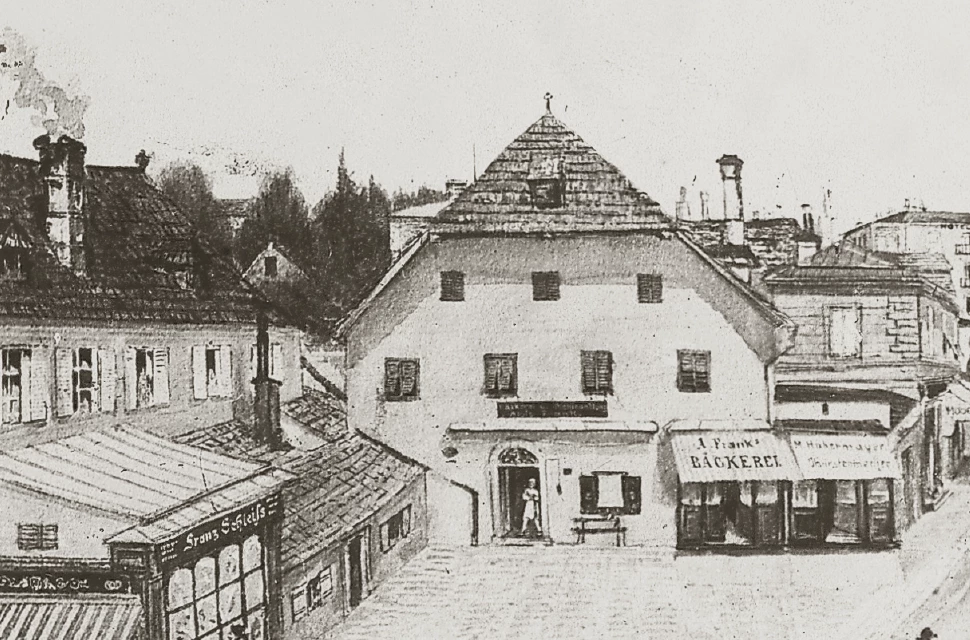
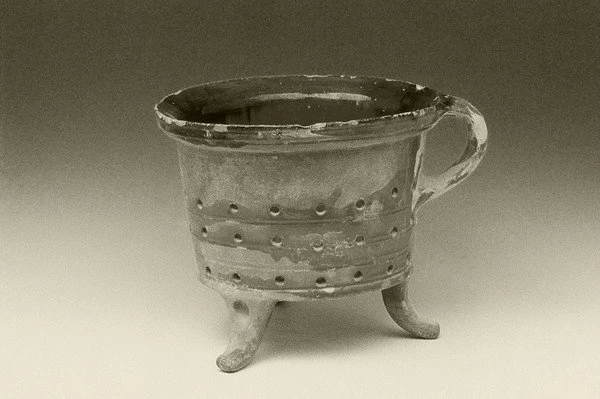
At the oldest ceramic manufactory in Europe – Gmunden Keramik, with over half a millennium of history, artist Maria Kulikovska creates works that transform the pain of loss into art. Founded in 1492, this factory is located in a picturesque town on the shore of an Alpine lake, in the heart of Austria. It is renowned for its traditional tableware with distinctive green patterns and collaborations with prominent artists, including Ai Weiwei.
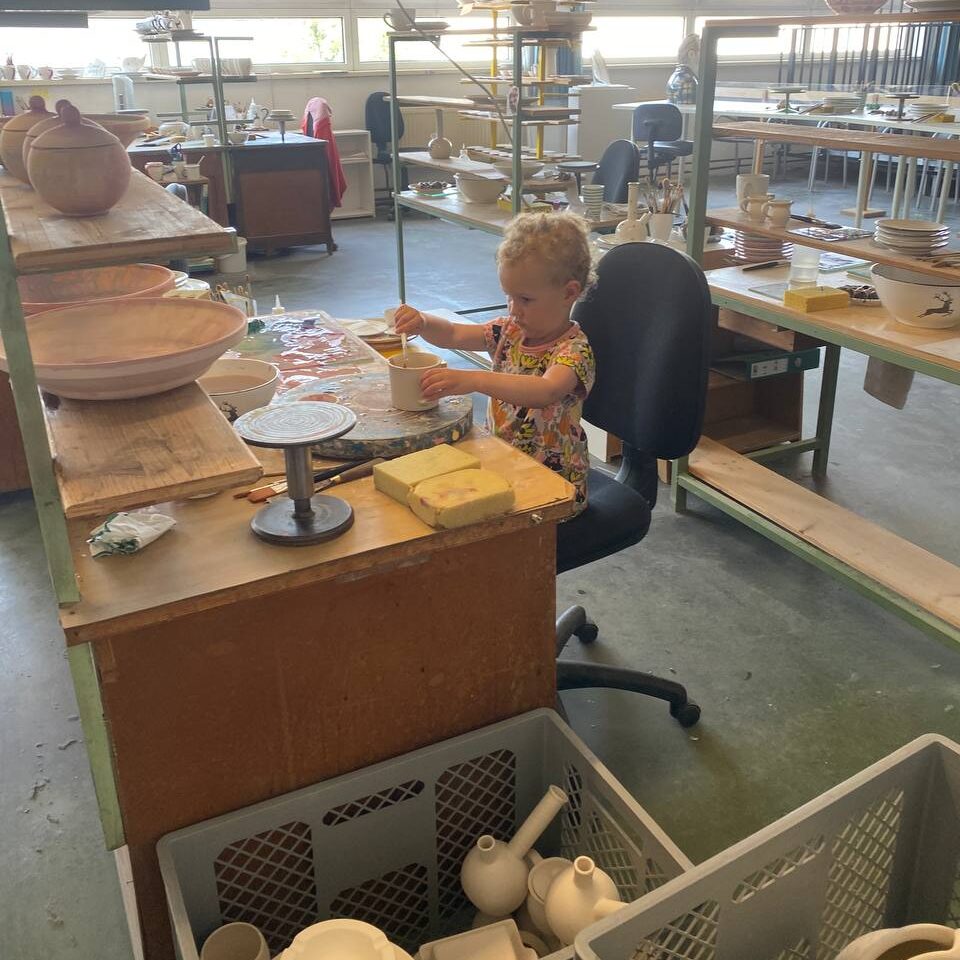
Maria arrived in Austria on March 16, 2022 (exactly eight years after the pseudo-referendum in occupied Crimea). Together with her newborn child, she was evacuated a month after Russia’s full-scale invasion of Ukraine, thanks to the director of the State Museums of Upper Austria, Dr. Alfred Weidinger, who not only provided shelter but also supported her as an artist. Through the museum’s strong ties with the legendary ceramic manufactory, Maria was invited to join the newly founded Academy of Ceramics Gmunden, marking the beginning of her journey with ceramics.
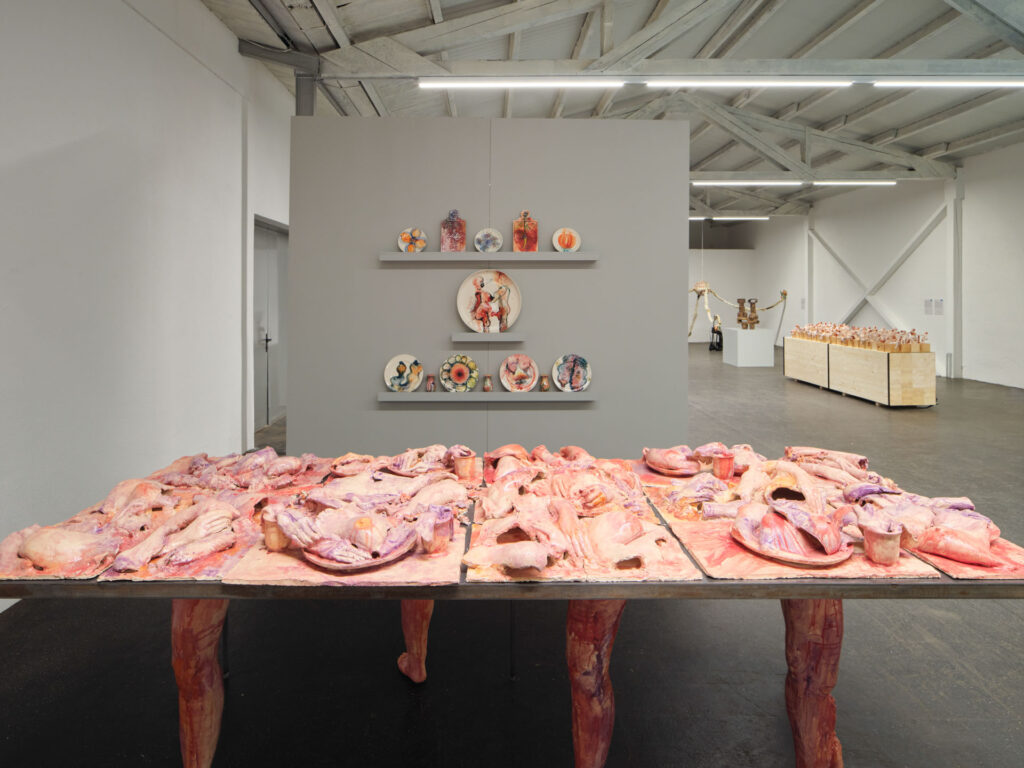
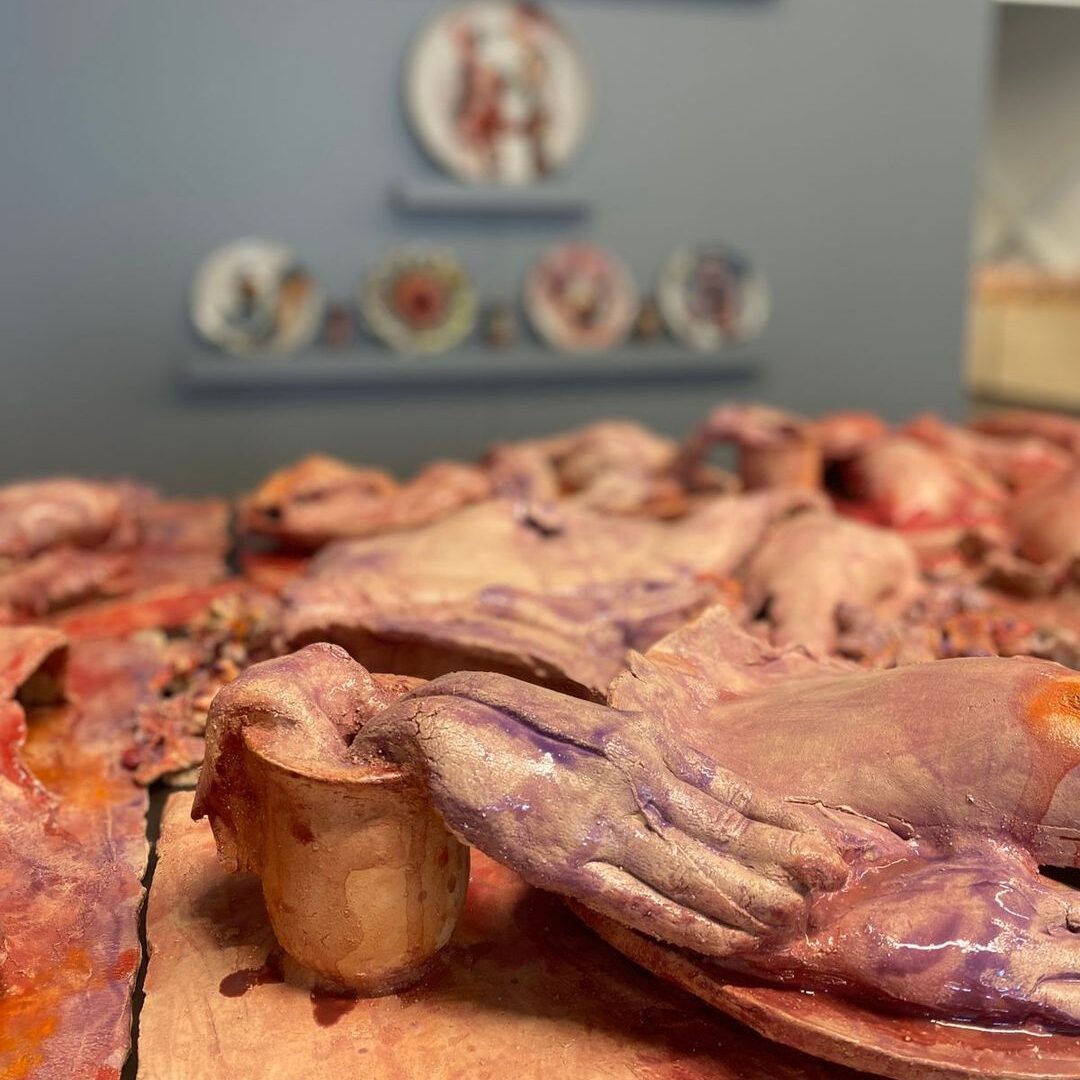
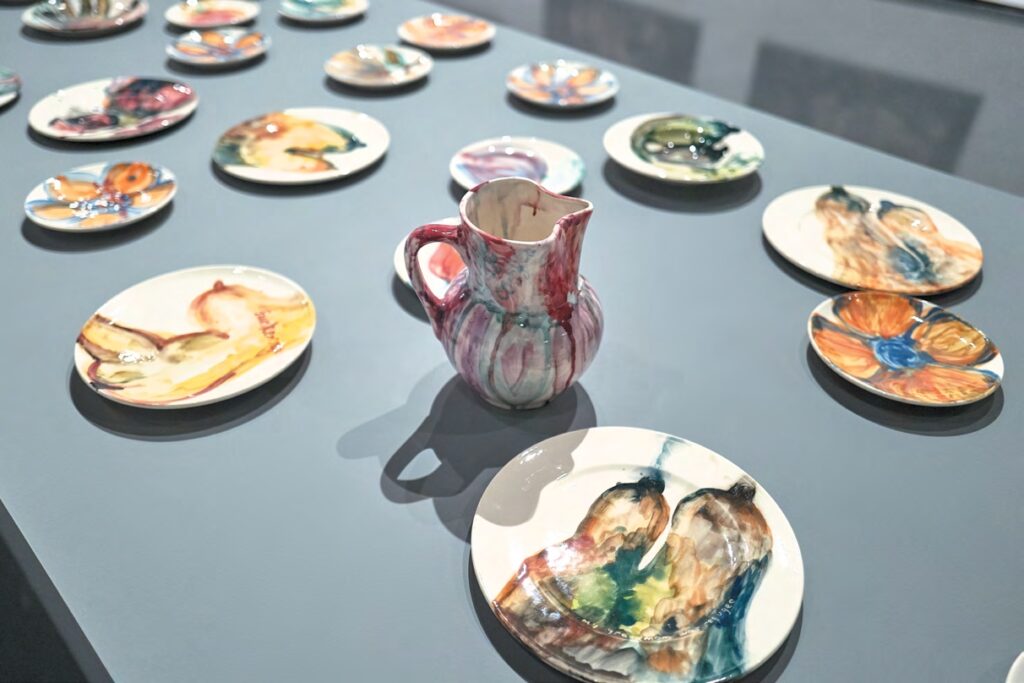
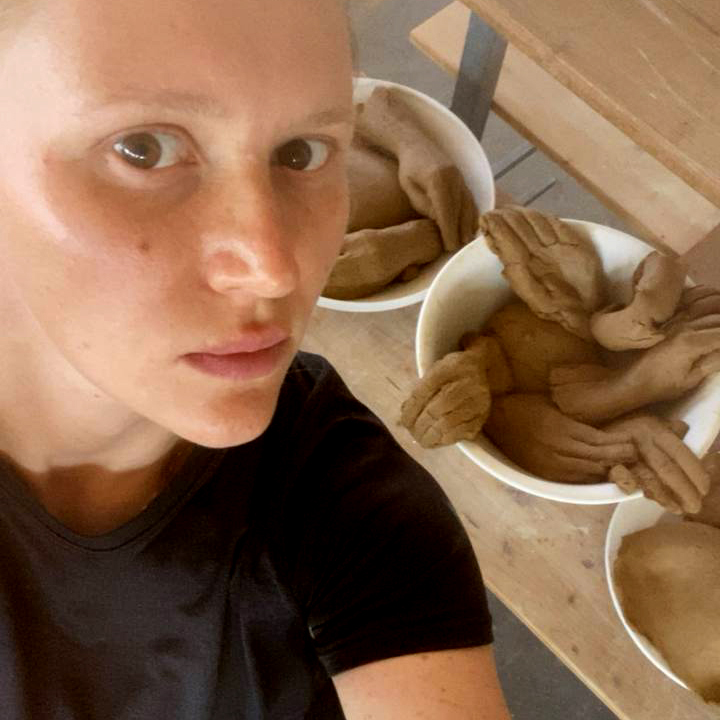
Despite personal hardships, physical exhaustion after childbirth, and another forced exile, Maria visited the factory daily. There, she created one of her most significant sculptures – “Negotiation Table?”. This piece is a ceramic installation: a long table filled with plates featuring clay casts of her own body, all hand-painted. The work became a visual representation of shock, numbness in the face of war’s horrors, and the ongoing search for answers.
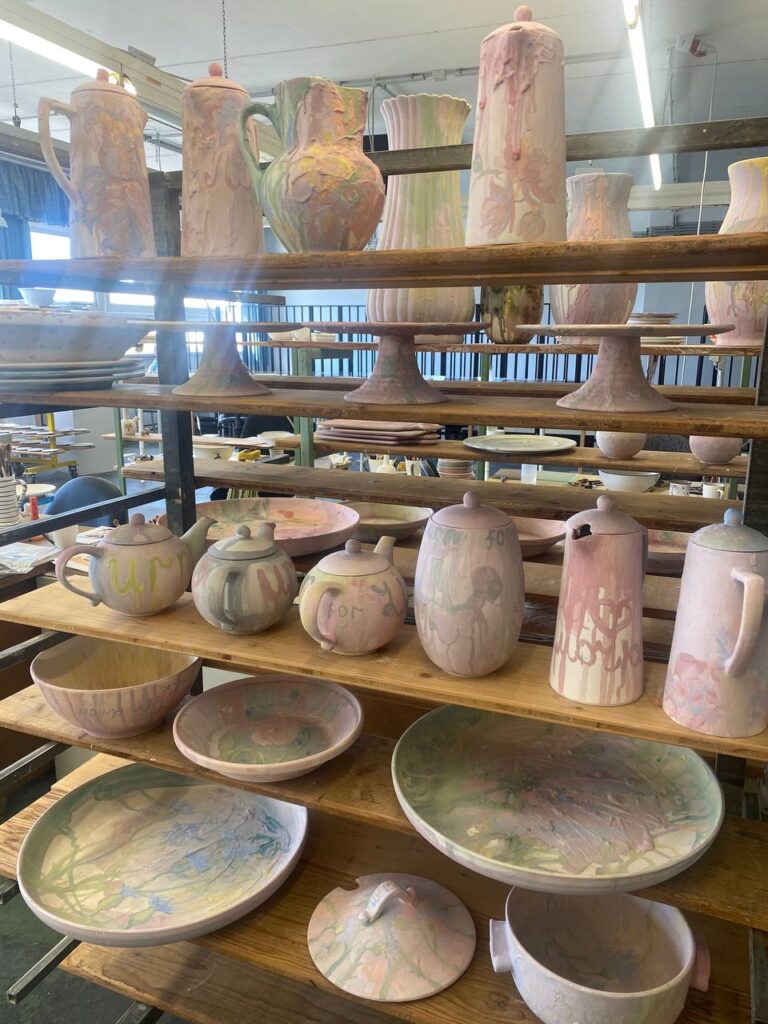
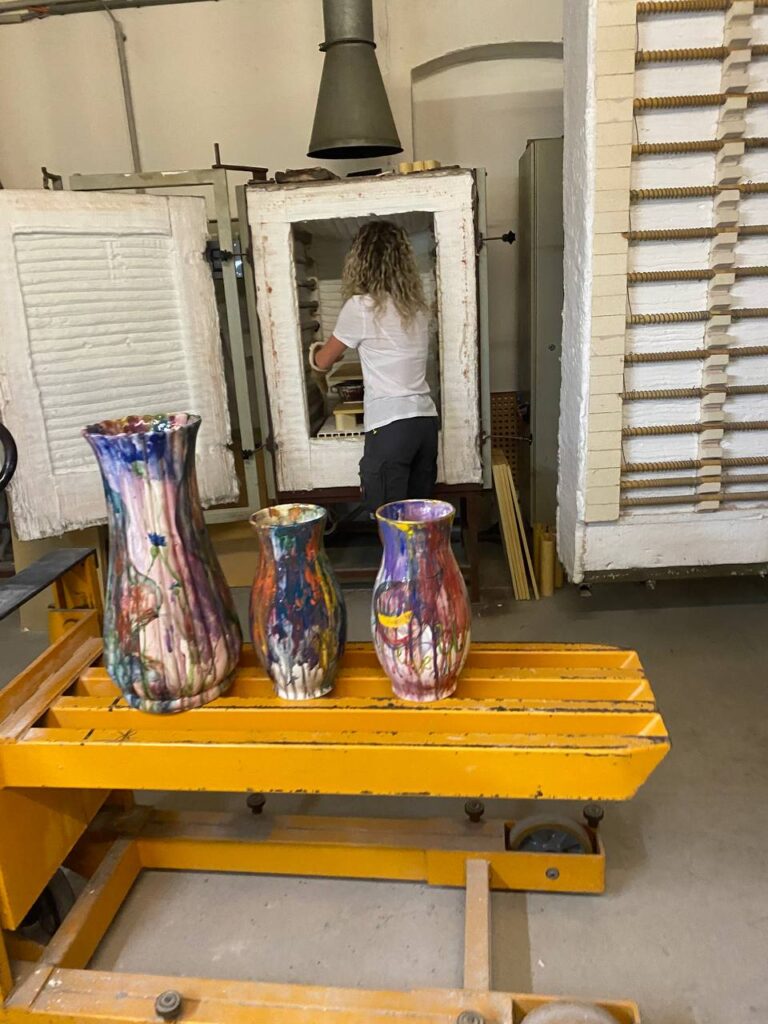
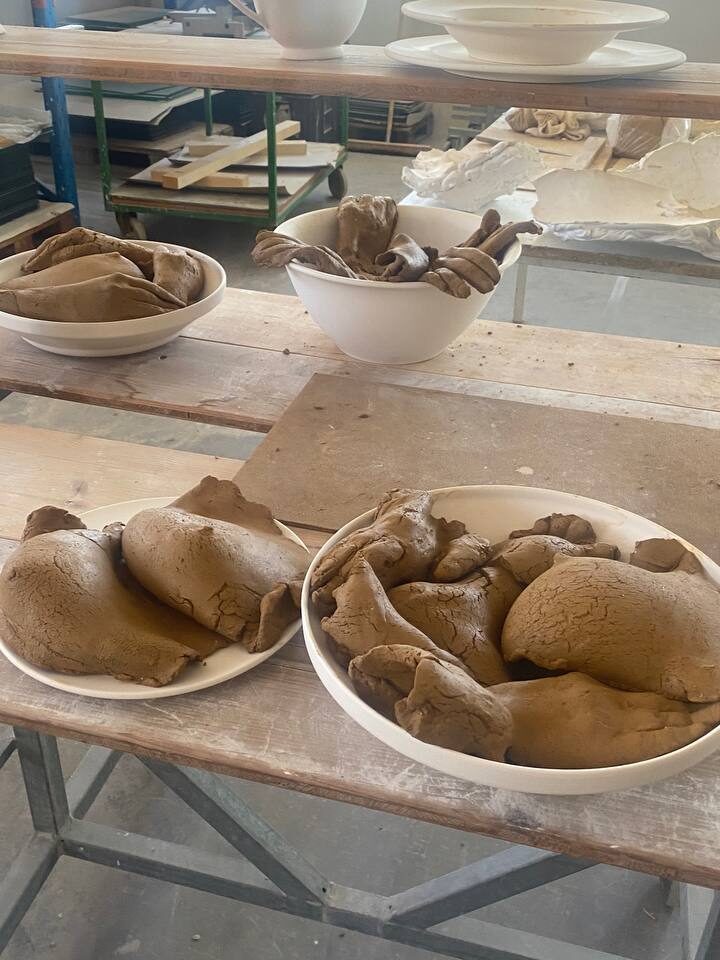
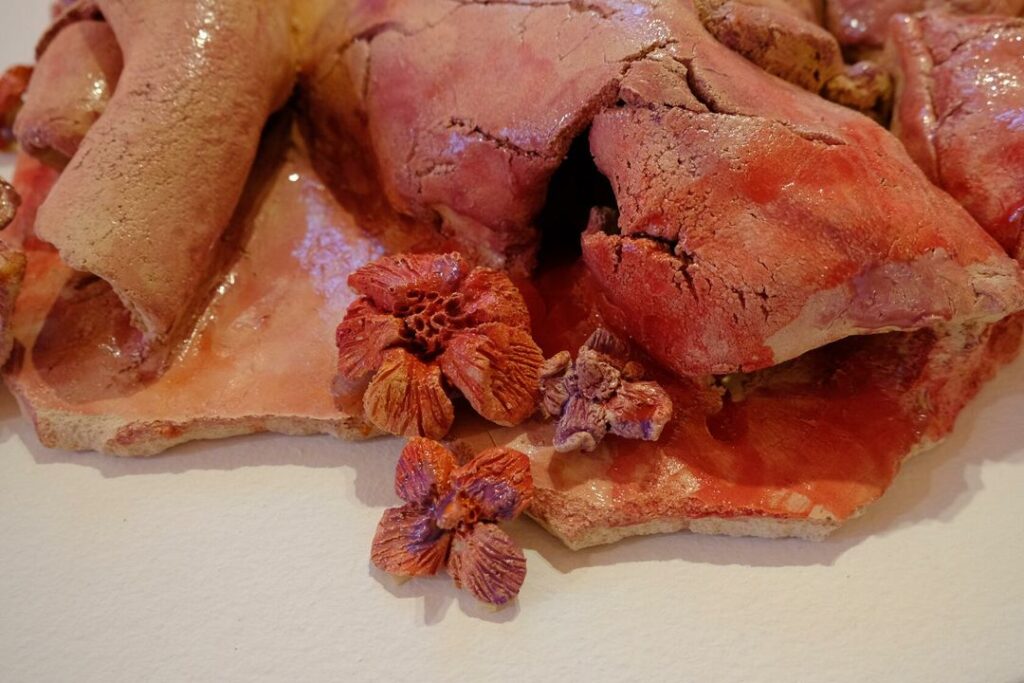
A new series of ceramics was made at the Academy of Ceramic Gmunden in Gmundner Keramik, Austria. Read the full story here.


For the first time, the still-unfinished “Negotiation Table?” was exhibited at Maria’s solo show “My Body is a Battlefield” (2022) at the Francisco Carolinum Museum in Linz. In 2023, the same exhibition, with “Negotiation Table?” as its centerpiece, inaugurated the Jossingfjord Museum amidst the Norwegian fjords. In 2024, “Negotiation Table?” and a selection of Maria’s painted ceramic works became part of the official European Capital of Culture exhibition program.
For Maria, ceramics became not just a form of artistic expression but a tool for self-therapy. In moments of panic attacks and extreme stress, she began painting discarded ceramic pieces, transforming them into works of art. This daily routine reminded her of home – of Kerch, her native city, which stands on the shattered remains of past civilizations. Painting ceramics each day became a way of reconstructing and reclaiming a fragile home she had not seen since 2013.
Her latest series of works, created in the summer of 2024, will be part of an exhibition in New York. These pieces are a kind of letter to her 96-year-old grandmother, who remains in occupied territory, waiting for her family’s return.
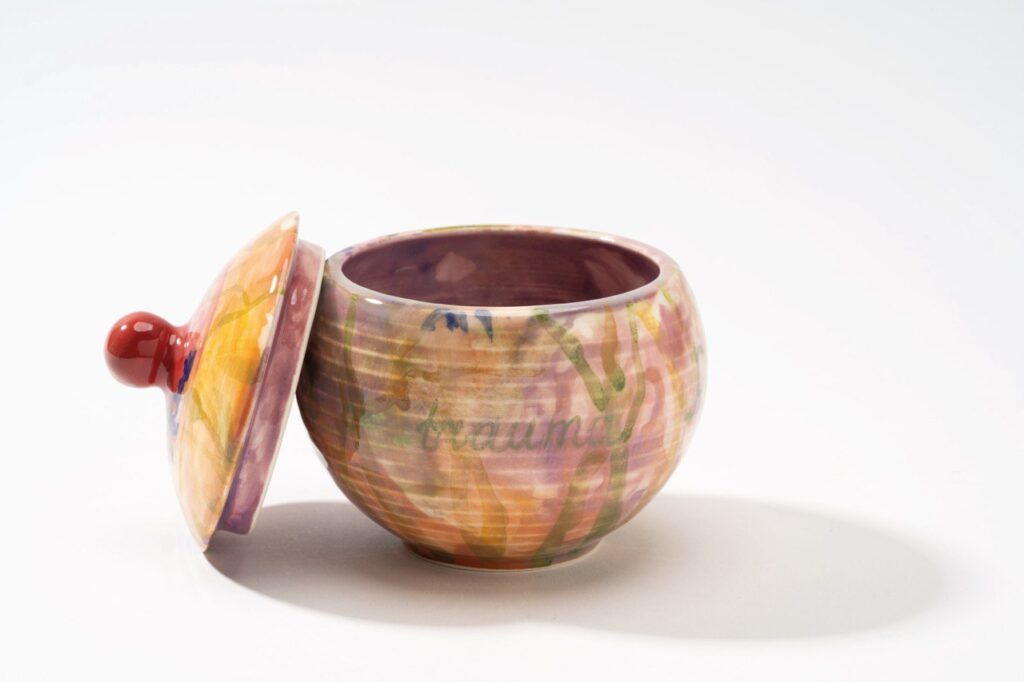

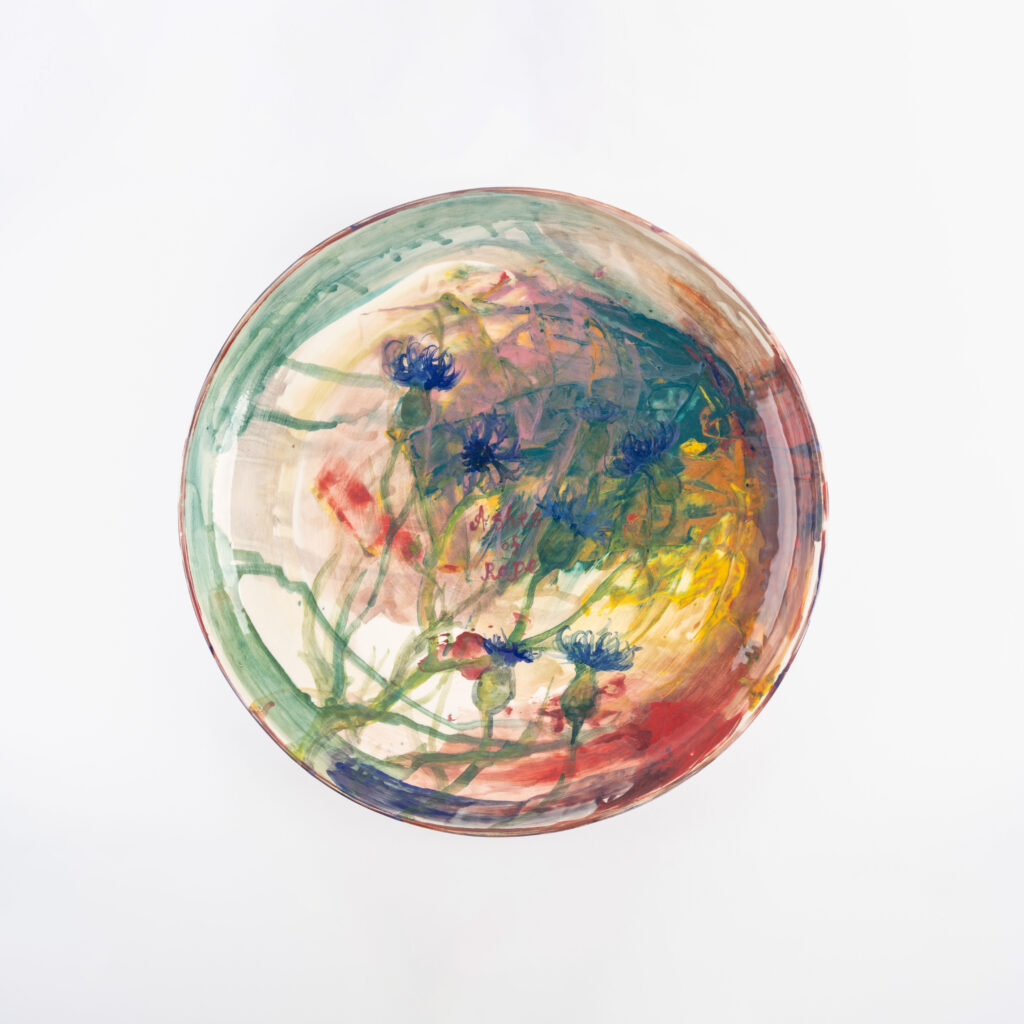
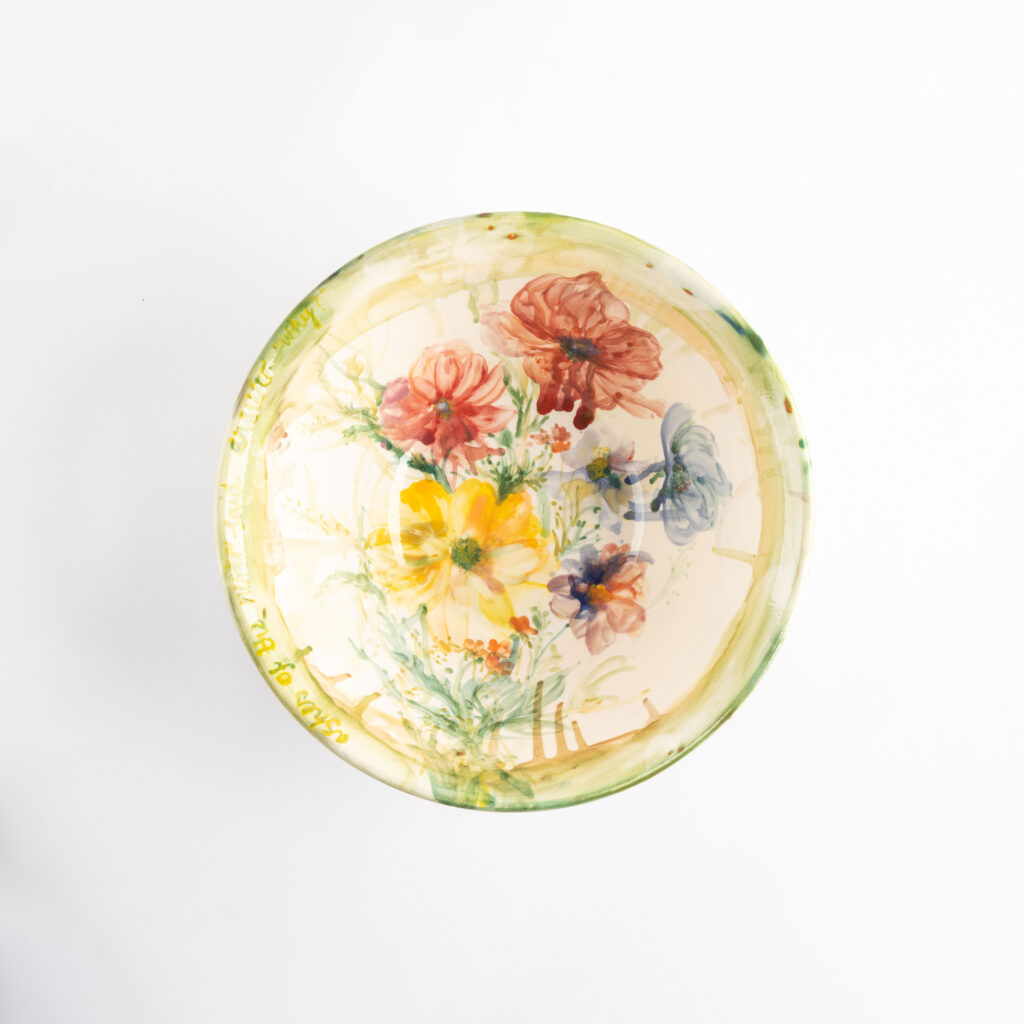
“I fill a home that no longer exists,” says the artist.
Maria paints Crimean flowers and herbs—symbols of a home that exists but remains unreachable beyond the impenetrable borders of war. However, searching for references online became a painful experience: instead of flowers, she found images of Russian weapons named after them. Cornflower, hyacinth, tulip, dandelion—no longer just plants, but missiles, drones, and anti-aircraft systems.
It was yet another stark reminder of war.
Still, Maria chooses to paint life, not destruction.
Her ceramics speak for those who have lost but continue to create, for those without a home but who build it in memory and art.